
Energy transition, agricultural soil consumption and innovations of Law 15 January 2026, No. 4: towards a balance between counterposed interests?
by Ludovico Iorio
The legislator’s attempt to reconcile competing interests.
On 20 January 2026, Law No. 4 of 15 January 2026 was published in the Official Gazette, converting into law, with amendments, Decree-Law No. 175 of 21 November 2025 (“Suitable Areas Decree”), which lays down urgent measures concerning the Transition 5.0 Plan and the production of energy from renewable sources.
The production of energy from renewable energy sources (“RES”) has a particular connection with the agri-food sector. This link has become even more evident in light of recent legislative developments concerning the regulation of suitable areas and agri-voltaics, as well as the content of Legislative Decree No. 190 of 25 November 2024 (“Testo Unico delle Fonti di energia rinnovabili”), which seeks to coordinate the subject matter also with agricultural activity.
The Testo Unico openly declares its objective, qualified as being in the public interest, of ensuring «the widest possible dissemination of renewable energy production plants». Indeed, Article 1, par. II, incorporates the corresponding principle of European origin. The national lawmaker in 2024 thus gave effect to the principles set out in the so-called RED II Directive (Directive (EU) 2018/2001), according to which national rules governing administrative authorization and certification procedures for renewable energy production plants, as well as the related networks, must be oriented toward implementing the “energy efficiency first” principle. As a consequence, such procedures must display a certain degree of proportionality and necessity, in terms of duration and resources employed, with respect to the objective pursued. However, Article 2 of the aforementioned Testo Unico grants public utility status to the construction works and operational activities of RES plants, classifying them as urgent and non-deferrable, thereby allowing their installation also on agricultural land.
Nevertheless, the gradual phase-out of fossil fuels in favour of renewable energy sources cannot take place at the expense of safeguarding other interests, such as those relating to environmental protection, biodiversity, ecosystems, or landscape preservation. In this regard, the regulation of so-called suitable areas for the installation of such plants plays an essential role, as it entails the assessment of potentially conflicting interests – namely, decarbonization objectives and landscape or agricultural concerns – particularly during the specifically provided procedural phase (Italian Constitutional Court, 30 July 2021, No. 177).
Agri-voltaics and innovations concerning “suitable areas”.
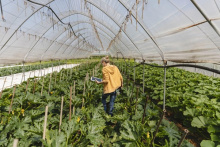
The “Suitable Areas Decree”, through Article 2, par. I, let. f-bis), amending Article 11-bis of the Testo Unico, provides the definition necessary to distinguish agri-voltaics from “pure and simple” on-shore photovoltaic systems and highlights the added value of the former in terms of ensuring the continuity of agricultural activity.
Between the two categories there exists a genera–species relationship, whereby agri-voltaic plants fall within the broader macro-category of photovoltaic systems. The distinguishing element does not lie in the intrinsic technical features of the plant, but rather in the planning designation, identified in the localization phase, of the land intended to host the installation and in the impact that the modules have on the site concerned. One speaks of agri-voltaics (Article 4, par. I, let. f-bis) of the T.U. on RES) where installations are placed on portions of land used for crop cultivation or livestock farming, and where the systems allow the continuity of such activities to be preserved. As a favourable technical solution, not equally suitable for traditional photovoltaic systems, the legislation provides for the possible rotation of modules, which must be installed in an elevated position above the ground, as well as «the application of digital and precision agriculture tools». The ontological difference between the two types of intervention is so significant that it may vitiate, from an evidentiary and reasoning standpoint, any administrative measure resulting from an assessment process in which the characteristics of the two categories have been treated as equivalent (T.A.R. Puglia, Lecce, Section II, 4 November 2024, No. 1200).
In this regard, certain areas are considered suitable for plant construction ex lege (such as abandoned quarries or mines, areas adjacent to highways, etc., pursuant to Article 11-bis, par. I, of the T.U.), while others are designated as such through the exercise of regional or municipal planning powers. In any event, the localization of such areas must be preceded by a preliminary assessment aimed at minimizing the environmental, landscape, and territorial impact of the works, while at the same time seeking a balance with the decarbonization targets set for 2030.
Case law (Italian Constitutional Court, 20 January 2022, No. 11; Italian Constitutional Court, 28 July 2025, No. 134; T.A.R. Lazio, Rome, Section III, 11 August 2025; T.A.R. Lombardia, Brescia, Section I, 27 October 2025, No. 950) has clarified that neither regional legislators nor municipal planners have the power to impose an absolute and automatic negative constraint on the suitability of an area. Consequently, an initial designation of “unsuitability” merely triggers a more thorough analysis within the authorization procedure, which must ultimately conclude with a decision supported by enhanced reasoning. It follows that a declaration of unsuitability can never be equated with an ex ante statutory prohibition.
The Testo Unico on RES contains three annexes (A, B, and C), each describing different types of interventions in suitable areas and corresponding to distinct administrative regimes. These include the liberalized regime under Article 7, the simplified authorization procedure provided by the subsequent article, and the single authorization procedure described in Article 9. Annex “A” addresses categories of interventions subject to the liberalized regime for installations in suitable areas; among these are agri-voltaic plants with a capacity below 5 MW, provided that they do not obstruct the continuity of agricultural or pastoral activities.
Above that threshold, however, the relevant authorizing title must be obtained in accordance with the procedures set out in Articles 8 and 9 of the Testo Unico, as these constitute new construction activities falling within the scope of Article 10 of d.P.R. No. 380 of 2001, due to their transformative impact on land from an urban planning and building perspective. To this must be added one of the innovations introduced by Law No. 4/2026.
The Annex entitled “Amendments introduced during the conversion of Decree-Law No. 175 of 21 November 2025 – Article 2” provides that the installation of agri-voltaic modules, although always permitted in suitable areas, is subject to the prior submission of a sworn declaration by a qualified professional. The professional’s certification must attest that the installation is adequate to ensure a gross marketable agricultural output on the land not lower than eighty percent of its overall value, even after the modules have been put into operation. The technician’s declaration must be attached to the project documentation submitted pursuant to Article 9 and, in any case, made available to the authority responsible for subsequent verification of the plant’s adequacy in relation to the concurrent agricultural activity.
A different regime applies to photovoltaic plants tout court, pursuant to Article 11-bis, par. I, let. l), No. 1, of the amended T.U. on RES. Such systems may be installed only within areas located inside industrial facilities and plants, provided that these are not intended for agricultural or livestock production nor for renewable energy production. The consequence of this provision is that the agricultural element constitutes a negative limiting factor for traditional photovoltaic systems, whereas it is irrelevant for agri-voltaic systems, by virtue of the continuity they ensure for activities carried out on the land concerned. In the same perspective, the article seeks to reconcile energy transition needs with agricultural requirements by allowing the installation of photovoltaic modules in areas which, although designated for agricultural use, are located at a minimum distance of 350 meters from the point where the plant will be situated.
Finally, through the same Annex, Article 11-bis, par. IV, let. g), has been supplemented. It specifies that, in order to preserve the agricultural designation of the land, regional legislators may include surfaces occupied by agri-voltaic installations in the overall calculation for qualifying areas as suitable. This calculation, already inclusive of agri-voltaic surfaces, must result in a measure not lower than 0.8 percent of utilized agricultural area and not exceeding 3 percent of such utilized areas. The same inclusion mechanism in the percentage calculation relating to utilized agricultural areas may also apply to «suitable areas under paragraph 1 falling within agricultural zones», where so provided by Regions or Autonomous Provinces.
Simplification aspects and further innovations.
The simplification measures relating to the single authorization procedure under Article 9 of the Testo Unico have been strengthened under the innovative framework introduced by Law No. 4/2026. By virtue of the conversion law, the final measure concluding the administrative process, where favourable, now also incorporates the Environmental impact assessment (“valutazione di impatto ambientale”) or the Appropriate Assessment (“valutazione di incidenza ambientale”), together with the simultaneous acquisition of the relevant authorization.
Moreover, the simplification aspects, alongside the reduction of procedural time limits set out in Articles 8 and 9 of the Consolidated Act, also concern the automatic qualification of compliance with adopted and approved planning instruments, as well as with current building regulations, for all interventions subject to the procedure under art. 8 and designed «in areas classified as suitable or in acceleration zones pursuant to art. 12». This is a significant development, since the procedure described in Article 8 does not, in itself, entail a formal amendment to the relevant planning instrument.
Article 11 of the Testo Unico has likewise been amended during the conversion process, reflecting a specific focus on safeguarding crop and pastoral activities carried out on land designated for plant installation. In particular, with regard to sanctions applicable to violations arising from the construction or operation of modules without authorization, the previously established pecuniary penalties and the obligation to restore the site to its prior condition remain in force. However, paragraph VIII adds a further sanctionable case, namely the «installation of agri-voltaic systems that do not allow for the preservation of the continuity of agricultural activities», subjecting such conduct to the same penalties.
Finally, the revised Article 11 of the T.U. on RES requires the territorially competent Municipality to monitor the continued existence of the suitability requirements for carrying out agro-pastoral activities during the five years following the installation of an agri-voltaics.
Conclusive remarks.
In conclusion, the national energy system’s decarbonization targets, set in line with supranational provisions in the Integrated National Energy and Climate Plan, and the binding deadlines established by the National Recovery and Resilience Plan for revitalizing the economic and social system following the pandemic crisis, are not disconnected from the concurrent assessment of other interests involved in the process.
For these reasons, the legislature of the reform has sought to enhance the guarantee of continuity for pastoral and agricultural activities, establishing it also as a quantitative and economic limit, now formalized through a specific technical certification during the design phase. The importance attributed to the agricultural designation of land, which must be considered by the competent authorities at the localization stage, does not exhaust there: the legislative innovations impose on municipal administrations the obligation to continue monitoring the adequacy of installed systems in relation to the land on which they are located, even for five years following installation.
Certainly, times are not appropriate yet to provide a definitive assessment of the effectiveness of the system being outlined in terms of proper balancing of interests, as the expanded possibility of installing agri-voltaics may not fully account for practical issues that also affect the continuity of agricultural activity, such as the manoeuvrability of large agricultural machinery or the impact of modules on crops. In any case, it is increasingly clear that the legislature places parallel importance on both energy and agricultural objectives, highlighting the necessity of arriving at technological solutions that satisfy the needs of both sectors.